Guide
How to apply for a student visa in the USA, step by step
A US student visa starts with a school, not an embassy. You need an I-20 first, then a $350 fee, then the visa, and a final rule published in July 2026 replaces open-ended admission with a fixed period.
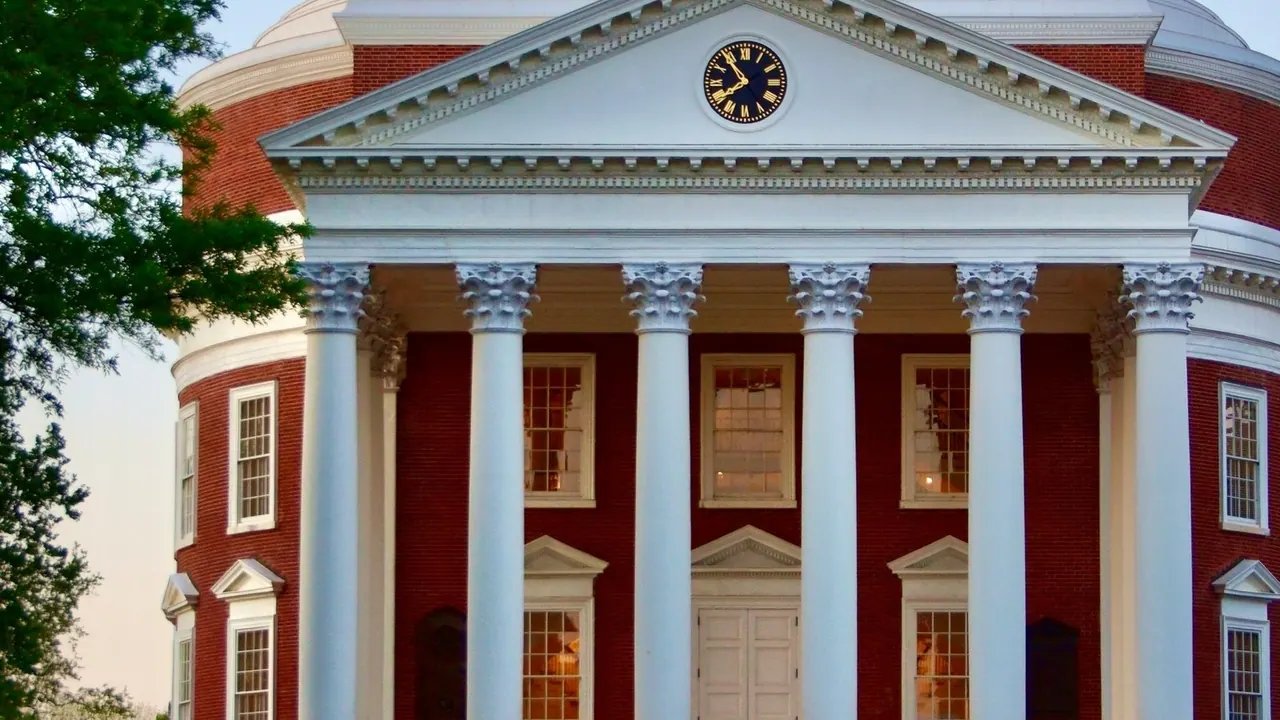
Anyone working out how to apply for a student visa in USA starts with a school, not a visa form. The order is a school place, then a Form I-20 from that school, then a $350 fee, and only then a visa application at a US embassy or consulate. A final rule published in July 2026 also replaces open-ended admission with a fixed period, with an effective date of 15 September 2026.
Which visa you need
The United States uses three common student categories. An F-1 student is in the country to pursue a full course of academic or professional study, including language training, at a school certified by the Student and Exchange Visitor Program (SEVP). An M-1 student attends an SEVP-certified vocational or other recognised non-academic institution. Spouses and qualifying children of F-1 and M-1 students hold F-2 and M-2 status.
There is also the J-1 exchange visitor visa, for people approved for work-and-study exchange programmes, such as visiting scholars and research assistants. The most common student visas are F-1 and M-1. The rest of this article follows the F-1 route.
Only certified schools may enrol you. Only SEVP-certified schools may enrol F and M students, and the Department of Homeland Security’s Study in the States portal has a school search tool for checking a school before you apply. Your visa type must also match the type of I-20 your school issues. An F-1 visa needs an academic I-20, and an M-1 visa needs a vocational one.
Step 1: get your Form I-20
Every F and M student needs a Form I-20, the Certificate of Eligibility for Nonimmigrant Student Status. Once an SEVP-certified school accepts you, a designated school official (DSO) there sends it to you. If more than one school accepts you, use only the I-20 from the school you will attend.
Three details matter on the form.
- Signatures. You and your DSO must both sign it. If you are under 18, a parent must sign for you.
- Your details. Compare the name and date of birth on the I-20 with your passport. If they differ, ask the DSO who sent the form to correct it and send a new one.
- The start date. The programme start date on the I-20 is the date you must report to school by, and it sets the 30-day entry window described below.
Before the school issues the form, it must see proof that you can pay. Prospective F-1 and M-1 students need the money to cover tuition, books, living expenses and travel. Accepted evidence includes family bank statements, a sponsor’s documentation, financial aid letters, scholarship letters and a letter from an employer showing annual salary. Some schools set their own rules for what counts, so the international student office is the place to confirm.
International students are not eligible for US government-funded financial aid, but some schools offer their own aid. Our guide to scholarships for international students lists funded routes, and how to study abroad for free covers the cases where tuition is waived.
Step 2: pay the I-901 SEVIS fee
The I-901 SEVIS fee is mandatory, and it comes before the visa. Regulation requires all prospective F and M students to pay it before the Department of State issues a visa. Students from visa waiver countries pay it before seeking admission at a port of entry. The fee for F and M visa applicants is $350. It is separate from visa fees and school SEVIS administration fees.
You need four sets of details to pay: your name, address, date of birth and email address; your country of birth and citizenship; the school code from the I-20; and the SEVIS identification number from the I-20. That is why the I-20 must arrive first.
A prospective F or M student with a country of citizenship or country of birth of Cameroon, Ghana, Kenya, Nigeria or Gambia must pay by money order, Western Union Quick Pay or certified check drawn from a US bank. All other prospective F or M students also have the option to make a credit card payment on FMJfee.com. Someone else can pay for you, using the same method of payment, and a third-party payer is restricted from using a credit card if you cannot.
Print the receipt. You must present proof of the fee at your visa interview. A dependent applying for an F-2 or M-2 visa does not pay the fee. If the receipt has a misspelling or you change school, you email a correction request, and it must reach the portal at least two weeks before the visa interview.
Step 3: apply for the visa
With the I-20 and the fee receipt in hand, you apply at a US embassy or consulate. The Department of State’s student visa pages and the website of the embassy where you will apply cover eligibility rules, how to apply, appointment wait times and application fees. The Department of State announced changes to student and exchange visitor visas in June 2025, so check your embassy or consulate for application and appointment eligibility.
Two dates frame the timing. F-1 and M-1 visas can be issued up to 365 days before your course start date. You are expected to bring the original I-20 to the interview, although a consular officer may accept a copy in limited circumstances that justify issuing a visa before the original arrives. Bring the financial evidence too, because prospective students must bring it when applying for the visa.
When the visa arrives, check that it is the right type and that the name and date of birth match your passport.
Entering the country
You may arrive up to 30 days before the start date on your I-20. Carry the I-20 in your hand luggage, not in a suitcase, because a Customs and Border Protection officer will ask for it at the port of entry. You must report to your school by the start date. If you will be late, contact the school’s officials immediately.
If you arrive without all the paperwork, officers can issue a Form I-515A, a notice to student or exchange visitor. What follows when the SEVIS fee is unpaid is set out by ICE. For a student whose record is still in initial status, CBP issues an I-515A that allows 30 days to pay, and SEVP places a flag on the record that alerts officers at ports of entry. F and M students who do not pay after receiving an I-515A are subject to investigation, possible arrest, detention, deportation and denial of requested benefits, and a possible bar from future entry.
What the visa lets you do
Work opportunities for F-1 students are limited, and that is why you must prove you can fund your studies before you come. Working without permission has a stated cost: if your DSO knows about it, they must report it, your SEVIS record is terminated, and you must leave the country immediately and may not be allowed back.
- On campus. Active F-1 students may apply to their DSO up to 30 days before classes start. During term you may not work more than 20 hours a week.
- Off campus. Only F-1 students who have completed at least one full academic year and have an economic hardship that meets DHS’s emergent circumstances rules may apply. The DSO recommends you and issues a new I-20, and you then file Form I-765 with USCIS within 30 days of receiving that recommendation. You cannot start work while the form is pending.
- Social Security number. Every student who wishes to work must apply for one.
Your course load is a rule too. An F-1 undergraduate at a college or university must take at least 12 credit hours per term. Only one class or three credits during each term or semester may count toward a full course of study for an F-1 student if the class is taken online or through distance learning. You cannot drop below a full course without your DSO’s approval.
F-2 and M-2 dependents may not work and are not eligible for Social Security numbers, and may study at an SEVP-certified school as long as they are enrolled in less than a full course of study. Our guide to paid internships for international students covers training routes that sit alongside these limits.
The July 2026 rule on length of stay
CBP admits F-1 students for duration of status, and the Study in the States pages that describe it date from 2023 to 2025. The rule’s preamble describes the same arrangement. For F academic students, duration of status is generally the time spent pursuing a full course of study at an approved institution or in practical training after completing studies, plus time to depart the country.
On 17 July 2026, DHS published a final rule in the Federal Register that replaces duration of status with admission for a fixed time period. Its DATES paragraph reads “The effective date is September 15, 2026”. The same paragraph adds that if congressional review changes the date, DHS will publish a Federal Register document setting the actual effective date or ending the rule. A banner on ICE’s I-901 fee page announces that DHS “published a final rule establishing a fixed time period of admission”. The banner gives the publication date as 17 July 2026 and names F students, J exchange visitors and foreign media representatives.
For F-1 students, the regulation text admits a student for a fixed period, which is the period needed to complete the course of study on the Form I-20, “not to exceed a period of 4 years”. The text sets three exceptions. Students in an English language training programme are “restricted to a maximum of admission period of 24 months”, plus 30 days. Students at a public high school are “restricted to an aggregate of no more than 12 months”. Border commuter students fall under a separate paragraph of the regulation. The 30 days before the report date and 30 days after the programme end date do not count towards the maximum length of stay. A student who needs longer applies for an extension of stay.
The rule also shortens the departure period. DHS is decreasing the period F-1 students have to prepare to depart after a course or post-completion practical training from 60 to 30 days. The Study in the States life-cycle page still reads that F students must depart within 60 days of their programme end date and M students within 30 days.
The rule includes a transition. Under the regulation text, F and J students admitted for duration of status and properly maintaining status on 15 September 2026 may stay until the later of two dates. One is the expiry date on an Employment Authorization Document (Form I-766). The other is the programme end date on their I-20. The limit is four years from 15 September 2026, plus the 60-day departure period for F students, and the regulation gives this as 14 November 2030.
In its response to comments, DHS writes that an F-1 student whose programme or OPT has ended on the effective date “will have the remainder of their allowed departure period”. DHS gives that period as 60 days from the programme end date on their I-20. For F-1 students recommended for post-completion OPT, the transition text adds a carve-out. One who files Form I-765 on or before 18 March 2027, before the admission period expires, does not need to file Form I-539 for the requested period of post-completion OPT.
A worked example, ours
This timeline is invented, to show how the windows fit. A student is accepted for a programme that starts on 23 August 2027. The visa can be issued from 365 days before, which is 23 August 2026. Entry is allowed from 30 days before, which is 24 July 2027. With the $350 SEVIS fee paid, the receipt goes in the folder with the I-20 and the bank statements. This example leaves out the visa application fee.
Mistakes that cost students
- Paying the SEVIS fee before the I-20 arrives, so the school code and ID are missing.
- Packing the I-20 in checked luggage.
- Leaving the financial evidence at home.
- Starting on-campus work before your DSO approves it, or off-campus work before USCIS approves your Form I-765.
- Dropping below 12 credit hours without the DSO’s approval.
- Using a visa type that does not match the I-20.
Common questions
When can I apply for the visa? After you are accepted to an SEVP-certified school and have a receipt for payment of the I-901 fee, you can apply for a visa at a US embassy or consulate.
Does my spouse pay the SEVIS fee? No. A dependent applying for an F-2 or M-2 visa does not pay it, but the DSO issues a separate I-20 for each dependent.
How many online classes count towards a full course of study? For an F-1 student, only one class or three credits during each term or semester may count if the class is taken online or through distance learning. No online or distance learning classes may count towards an M-1 student’s full course of study.
Where can I compare other countries? Our guides cover the UK and Canada, Germany, Australia and the English test side of visas.
Our analysis
A $350 fee sits between the Form I-20 and the visa interview. The I-20 supplies the school code and SEVIS number needed to pay it, and the receipt is required at the interview. Fee correction requests are wanted at least two weeks before the interview. Students from Cameroon, Ghana, Kenya, Nigeria and Gambia pay by money order, Western Union Quick Pay or certified check drawn from a US bank, and all other students also have the card option.
The length-of-stay figures come from different documents. The Federal Register rule gives an effective date of 15 September 2026 with a congressional-review proviso. It cuts the F-1 departure period from 60 days to 30. It admits F-1 students for the period needed to finish the course on the I-20, not to exceed four years, with 24 months for English language training and 12 months for public high school. For students already in status, the regulation gives 14 November 2030 as the outer limit for F students. The Study in the States page still shows 60 days for F students, and it was last updated on 25 May 2023.
Several points are not stated or could not be confirmed. The DHS, ICE and USAGov pages listed in the sources do not report whether the 15 September 2026 date held, and the ICE banner confirms only that the rule was published on 17 July 2026. The visa application fee, the interview booking steps and the current wait times are published by the State Department. No source gives a figure for how much money a student must show. The cost areas are tuition, books, living costs and travel, and certain schools may have specific requirements for acceptable forms of evidence. USAGov carries a notice about the June 2025 changes to student and exchange visas, but it gives no detail of what changed.
Work and family rules sit on separate limits. On-campus work is capped at 20 hours a week during term, and off-campus work needs a completed academic year and a hardship approval. F-2 and M-2 dependents may not work. By our sums, the 24-month English language cap is half of the four-year maximum, and the 12-month public high school cap is a quarter of it.
If you spot a mistake, tell us and we will correct it.
Edited by Prince Ibenne, founder and editor. Read how we stay independent. This is general information, not legal, tax or immigration advice. See the disclaimer, and check the official source for your own case.