Guide
Freelance taxes quarterly: the four US payment dates and how much to pay
Nobody withholds tax from a freelancer, so the IRS expects it in four instalments across the year. Here are the dates, the rule that decides how much each payment must be, and what a late or short payment costs.
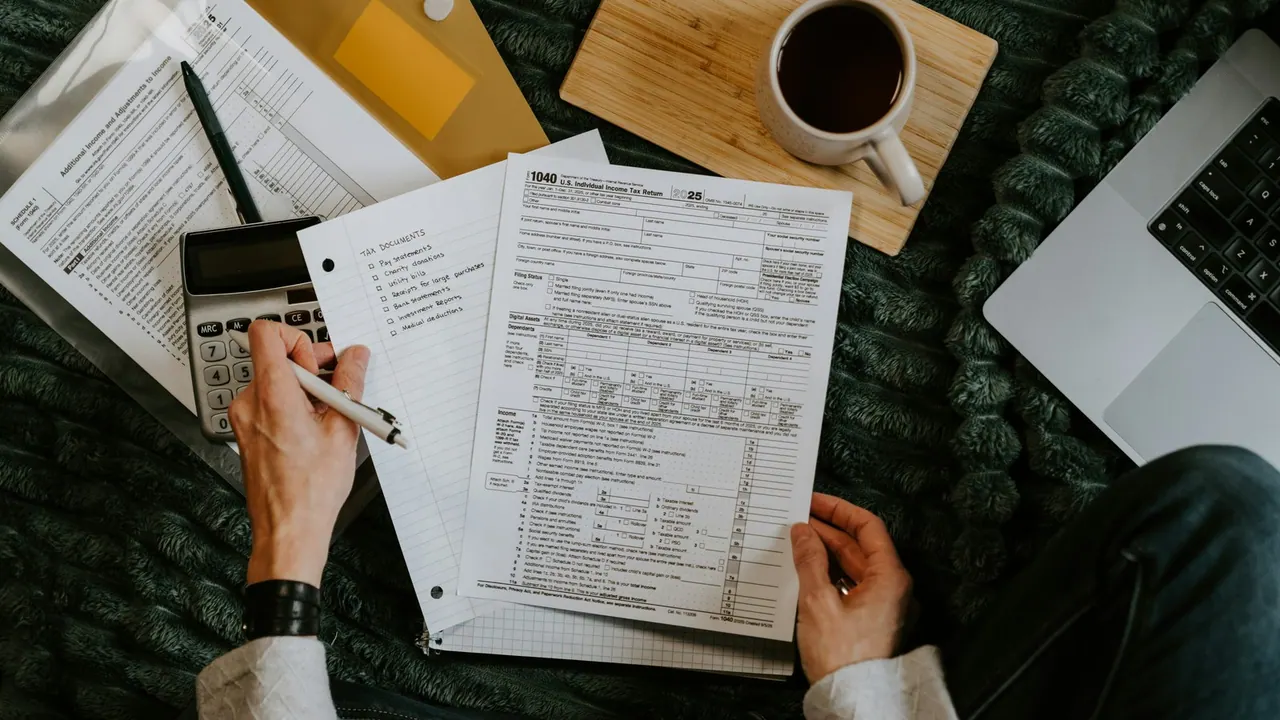
Freelance taxes quarterly are the part of self-employment that surprises people most. A client who pays an invoice in full has withheld nothing, so the IRS expects the freelancer to send income tax and self-employment tax in four instalments during the year instead of one bill in April. This guide covers the United States only, and it follows the federal rules for the 2026 tax year.
Who has to pay estimated tax
Taxes must be paid as you earn or receive income during the year, either through withholding or estimated tax payments. For someone in business for themselves, estimated payments are generally needed. Individuals, including sole proprietors, partners and S corporation shareholders, generally have to pay if they expect to owe $1,000 or more when their return is filed.
Estimated tax covers more than income tax. According to the IRS, it also pays self-employment tax and alternative minimum tax, so a single set of payments handles all of them.
One exemption exists. A person owes no estimated tax for the current year when all three of these hold: no tax liability in the prior year, a US citizen or resident alien for the whole year, and a prior tax year of 12 months. “No tax liability” means total tax of zero or no duty to file an income tax return.
Freelancers who are not US citizens or resident aliens use a different form. Nonresident aliens use Form 1040-ES(NR) to figure estimated tax. Whether income earned from outside the country counts as US income is a separate question that this guide does not cover.
The four payment dates for 2026
The IRS divides the year into four payment periods, each with its own due date. Publication 505 lists the dates for the 2026 tax year:
| Income earned | Payment due |
|---|---|
| 1 January to 31 March | 15 April 2026 |
| 1 April to 31 May | 15 June 2026 |
| 1 June to 31 August | 15 September 2026 |
| 1 September to 31 December | 15 January 2027 |
The periods are uneven, which catches people out. The second is two months long and the fourth is four, so the schedule does not follow calendar quarters.
If a due date falls on a Saturday, Sunday or legal holiday, the payment is on time when made the next day that is not one of those. A mailed payment counts as paid on its postmark date.
The 2026 deadlines above are the IRS’s own dates. Publication 505 also allows a way to skip the last one. If you file your 2026 Form 1040 by 31 January 2027 and pay the rest of the tax you owe, you do not need to make the payment due on 15 January 2027. By our analysis, the three earlier payments still count, since the skip applies only to the January one.
How to work out each payment
The IRS describes estimated tax as a forecast built on your own figures. You estimate your expected adjusted gross income, taxable income, taxes, deductions and credits for the year. It may help to use the prior year’s income, deductions and credits as a starting point, and adjustments are needed for changes in your own situation and for recent changes in tax law. Form 1040-ES contains the worksheet, and Publication 505 has the detailed versions.
In a first year of self-employment there is no prior return to lean on. You need to estimate the amount of income you expect to earn for the year. If the estimate proves too high or too low, you complete another worksheet and refigure the next quarter’s payment.
Self-employment tax is part of the sum
Self-employment tax is the freelancer’s version of the Social Security and Medicare tax that employers withhold from wages. Together the Social Security part (12.4%) and the Medicare part (2.9%) make 15.3%. For 2026, the first $184,500 of combined wages, tips and net earnings is subject to the Social Security part. You pay the tax and file Schedule SE once net earnings from self-employment reach $400.
In the Publication 505 worksheet, the base is 92.35% of your expected net profit. That figure gets 2.9% for Medicare and 12.4% for Social Security, up to the wage base. By our sums, a freelancer expecting $60,000 of net profit and no wages has a base of $55,410, and 15.3% of it is $8,477.73. The worksheet then multiplies the total self-employment tax by 50%, which gives the expected deduction when working out adjusted gross income. That deduction lowers income tax only, not the self-employment tax itself.
The amount that avoids a penalty
The key figure is the required annual payment. For 2026, Publication 505 sets the total you must pay, through withholding and estimated payments, at the smaller of two amounts:
- 90% of your total expected tax for 2026, or
- 100% of the total tax shown on your 2025 return, where that return covers all 12 months.
For higher earners the second figure rises. If your adjusted gross income for 2025 was more than $150,000 ($75,000 if you are married filing separately), 110% replaces 100%. The IRS has special rules for farmers and fishermen too.
After subtracting any withholding you expect, the IRS sets out that the difference is usually paid in four equal instalments. A freelancer with no job and no withholding therefore divides the required annual payment by four. The following figures are our own illustration, not an IRS example. Suppose the 2026 tax is expected to be $20,000 and the 2025 return showed $12,000 of tax. The two tests give $18,000 and $12,000, so $12,000 is the smaller and each payment is $3,000. If 2025 adjusted gross income was above $150,000, the second test becomes $13,200, and each payment is $3,300.
How to pay
You can mail payments with Form 1040-ES, pay online, pay by phone, or pay from a mobile device using the IRS app. Payments can also be made through your online account at IRS.gov/account, which shows your payment history. Payments may also be made weekly, biweekly or monthly if that suits your cash flow, as long as enough has been paid by the end of each quarter.
According to the IRS, a Social Security number or an individual taxpayer identification number is needed to pay self-employment tax. The IRS describes Form SS-5 as the application for a Social Security card and Form W-7 as the application for an IRS individual taxpayer identification number.
What a short or late payment costs
A penalty may apply if you do not pay enough through withholding and estimated payments, or if a payment is late, even if you are due a refund when you file. Most taxpayers avoid the penalty if they owe less than $1,000 after withholding and credits, or if they paid at least 90% of the current year’s tax or 100% of the prior year’s tax, whichever is smaller. The penalty calculation is in the instructions for Form 2210.
Two reliefs exist. When income arrives unevenly, as it does for many freelancers with a few large invoices, the IRS allows annualising income and making unequal payments to avoid or lower the penalty, using Form 2210. The IRS can also waive the penalty where a casualty, disaster or other unusual circumstance caused the shortfall, or where the person retired after age 62 or became disabled and the underpayment was due to reasonable cause.
Where this fits with the rest of self-employment
Estimated tax comes after earlier steps. Contractor or employee status decides if you pay quarterly at all, and our guide to employee vs independent contractor covers that test. Our guide to registering as self-employed compares the United States with the UK and Canada, and how to invoice as a freelancer sets out what a UK invoice must show. Anyone weighing remote contract jobs will find the same employee-or-contractor question there.
Our analysis
This guide is for US freelancers who want to know what the IRS expects each quarter, and the main finding is that last year's return can fix a minimum yearly payment, which makes the system more predictable than a rule about expected income suggests. The schedule is the harder part to live with, because the four periods are unequal and the final one lands in the following year. By our analysis, a freelancer paid late in a period can owe tax before the invoice is settled.
The safe-harbour test is the most useful number in the system, and it carries a catch. Paying 100% of last year's tax gives a figure that is known in advance, whatever happens to income this year. The 110% version applies once adjusted gross income passes the threshold, and a freelancer whose income jumped between two years can cross it without having planned for it. By our sums, the same prior-year tax becomes $300 more per payment at that point, a rise of 10% across the year.
The IRS publishes amounts and dates, and several questions stay open. The IRS gives no share of income to set aside, so the 15.3% self-employment rate and an income tax rate have to be combined using the freelancer's own bracket. State and local estimated-tax rules are separate and are not covered here. Publication 505 lists due dates for 2026 only, so the 2027 dates sit in next year's edition. Foreign-earned income is not stated in the IRS material used here, so the box cannot say how it changes the sum, which matters for freelancers outside the United States working for US clients.
The guidance is written for people who file Form 1040, and a freelancer who runs a company or who is a nonresident alien meets different forms. Figures here are federal and for 2026, and the wage base, thresholds and due dates change from year to year. By our analysis, the penalty is worked out per payment period, so the exact charge on one shortfall cannot be given in general. Cash flow is the practical gap: a payment can be due while a client's invoice is still unpaid, and neither the IRS nor this guide can say how late clients will pay.
Source check
Each row below names the IRS page, the date it was checked, the words copied from it and our result. Figures we worked out ourselves are labelled as ours in the Our analysis box, and anything the IRS pages do not state is left out of the guide.
| Claim | Source page | Date checked | Quote | Result |
|---|---|---|---|---|
| Taxes paid as earned, by withholding or estimated payments | https://www.irs.gov/businesses/small-businesses-self-employed/estimated-taxes | 20 November 2026 | Taxes must be paid as you earn or receive income during the year, either through withholding or estimated tax payments. | Confirmed |
| Who must pay: $1,000 expected tax | https://www.irs.gov/businesses/small-businesses-self-employed/estimated-taxes | 20 November 2026 | generally have to make estimated tax payments if they expect to owe tax of $1,000 or more when their return is filed | Confirmed |
| Self-employed generally need to pay | https://www.irs.gov/businesses/small-businesses-self-employed/estimated-taxes | 20 November 2026 | If you are in business for yourself, you generally need to make estimated tax payments. | Confirmed |
| Estimated tax also pays self-employment and alternative minimum tax | https://www.irs.gov/businesses/small-businesses-self-employed/estimated-taxes | 20 November 2026 | other taxes such as self-employment tax and alternative minimum tax | Confirmed |
| Exemption: three conditions | https://www.irs.gov/businesses/small-businesses-self-employed/estimated-taxes | 20 November 2026 | You were a U.S. citizen or resident alien for the whole year | Confirmed |
| Meaning of no tax liability | https://www.irs.gov/businesses/small-businesses-self-employed/estimated-taxes | 20 November 2026 | You had no tax liability for the prior year if your total tax was zero or you didn’t have to file an income tax return. | Confirmed |
| Nonresident aliens use Form 1040-ES(NR) | https://www.irs.gov/businesses/small-businesses-self-employed/estimated-taxes | 20 November 2026 | Nonresident aliens use Form 1040-ES(NR) to figure estimated tax. | Confirmed |
| Four payment periods | https://www.irs.gov/publications/p505 | 20 November 2026 | the year is divided into four payment periods | Confirmed |
| Due date 15 April 2026 | https://www.irs.gov/publications/p505 | 20 November 2026 | April 15, 2026 | Confirmed |
| Due date 15 June 2026 | https://www.irs.gov/publications/p505 | 20 November 2026 | June 15, 2026 | Confirmed |
| Due date 15 September 2026 | https://www.irs.gov/publications/p505 | 20 November 2026 | Sept. 15, 2026 | Confirmed |
| Due date 15 January 2027 | https://www.irs.gov/publications/p505 | 20 November 2026 | Jan. 15, 2027 | Confirmed |
| Weekend and holiday rule | https://www.irs.gov/publications/p505 | 20 November 2026 | the payment will be on time if you make it on the next day that isn’t a Saturday, Sunday, or a holiday | Confirmed |
| Postmark rule | https://www.irs.gov/publications/p505 | 20 November 2026 | If a payment is mailed, the date of the U.S. postmark is considered the date of payment. | Confirmed |
| January payment skipped by filing by 31 January 2027 | https://www.irs.gov/publications/p505 | 20 November 2026 | If you file your 2026 Form 1040 or 1040-SR by January 31, 2027, and pay the rest of the tax you owe, you don’t need to make the payment due on January 15, 2027. | Confirmed |
| Penalty for missed earlier payments runs to the filing date | https://www.irs.gov/publications/p505 | 20 November 2026 | Any penalty for not making those payments will be figured up to January 26, 2027. | Confirmed (the date is the IRS example; the post states the principle only) |
| Smaller of 90% and 100% | https://www.irs.gov/publications/p505 | 20 November 2026 | 100% of the total tax shown on your 2025 return. Your 2025 tax return must cover all 12 months. | Confirmed |
| 110% for higher earners | https://www.irs.gov/publications/p505 | 20 November 2026 | If your AGI for 2025 was more than $150,000 ($75,000 if your filing status for 2026 is Married filing separately), substitute 110% for 100% | Confirmed |
| Four equal instalments after withholding | https://www.irs.gov/publications/p505 | 20 November 2026 | You must usually pay this difference in four equal installments. | Confirmed |
| Worksheet base is 92.35% | https://www.irs.gov/publications/p505 | 20 November 2026 | Multiply line 2 by 92.35% (0.9235). | Confirmed |
| Half of self-employment tax is the expected deduction | https://www.irs.gov/publications/p505 | 20 November 2026 | Multiply line 10 by 50% (0.50). | Confirmed |
| Prior year as a starting point, adjust for law changes | https://www.irs.gov/businesses/small-businesses-self-employed/estimated-taxes | 20 November 2026 | You must make adjustments both for changes in your own situation and for recent changes in the tax law. | Confirmed |
| First-year income estimate | https://www.irs.gov/businesses/small-businesses-self-employed/self-employed-individuals-tax-center | 20 November 2026 | If this is your first year being self-employed, you will need to estimate the amount of income you expect to earn for the year. | Confirmed |
| Refigure the next quarter if the estimate was wrong | https://www.irs.gov/businesses/small-businesses-self-employed/self-employed-individuals-tax-center | 20 November 2026 | simply complete another Form 1040-ES worksheet to refigure your estimated tax for the next quarter | Confirmed |
| Self-employed pay estimated taxes quarterly | https://www.irs.gov/businesses/small-businesses-self-employed/self-employed-individuals-tax-center | 20 November 2026 | generally you are required to file an annual income tax return and pay estimated taxes quarterly | Confirmed |
| Self-employment tax rate 15.3% | https://www.irs.gov/businesses/small-businesses-self-employed/self-employment-tax-social-security-and-medicare-taxes | 20 November 2026 | The self-employment tax rate is 15.3%. | Confirmed |
| 12.4% and 2.9% split | https://www.irs.gov/businesses/small-businesses-self-employed/self-employment-tax-social-security-and-medicare-taxes | 20 November 2026 | 12.4% for social security (old-age, survivors, and disability insurance) and 2.9% for Medicare (hospital insurance) | Confirmed |
| 2026 wage base $184,500 | https://www.irs.gov/businesses/small-businesses-self-employed/self-employment-tax-social-security-and-medicare-taxes | 20 November 2026 | For 2026, the first $184,500 of your combined wages, tips, and net earnings | Confirmed |
| $400 trigger | https://www.irs.gov/businesses/small-businesses-self-employed/self-employment-tax-social-security-and-medicare-taxes | 20 November 2026 | Your net earnings from self-employment (excluding church employee income) were $400 or more. | Confirmed |
| SSN or ITIN needed to pay self-employment tax | https://www.irs.gov/businesses/small-businesses-self-employed/self-employment-tax-social-security-and-medicare-taxes | 20 November 2026 | To pay self-employment tax, you must have a Social Security number (SSN) or an individual taxpayer identification number (ITIN). | Confirmed |
| Form SS-5 for a Social Security number | https://www.irs.gov/businesses/small-businesses-self-employed/self-employment-tax-social-security-and-medicare-taxes | 20 November 2026 | apply for one using Form SS-5, Application for a Social Security Card | Confirmed |
| Form W-7 for an ITIN | https://www.irs.gov/businesses/small-businesses-self-employed/self-employment-tax-social-security-and-medicare-taxes | 20 November 2026 | file Form W-7, Application for IRS Individual Taxpayer Identification Number | Confirmed |
| Deduction affects income tax only | https://www.irs.gov/businesses/small-businesses-self-employed/self-employment-tax-social-security-and-medicare-taxes | 20 November 2026 | It does not affect either your net earnings from self-employment or your self-employment tax. | Confirmed |
| Ways to pay | https://www.irs.gov/businesses/small-businesses-self-employed/estimated-taxes | 20 November 2026 | You can also make your estimated tax payments through your online account, where you can see your payment history and other tax records. | Confirmed |
| Weekly, biweekly or monthly payments allowed | https://www.irs.gov/businesses/small-businesses-self-employed/estimated-taxes | 20 November 2026 | as long as you’ve paid enough in by the end of the quarter | Confirmed |
| Penalty even when a refund is due | https://www.irs.gov/businesses/small-businesses-self-employed/estimated-taxes | 20 November 2026 | You also may have to pay a penalty if your estimated tax payments are late, even if you are due a refund when you file your tax return. | Confirmed |
| Safe harbour: under $1,000, or 90% or 100% | https://www.irs.gov/taxtopics/tc306 | 20 November 2026 | at least 90% of the tax for the current year or 100% of the tax shown on the return for the prior year, whichever is smaller | Confirmed |
| Annualised income and Form 2210 | https://www.irs.gov/taxtopics/tc306 | 20 November 2026 | you may be able to vary the amounts of the payments to avoid or lower the penalty by using the annualized installment method | Confirmed |
| Penalty waiver for casualty or disaster | https://www.irs.gov/taxtopics/tc306 | 20 November 2026 | a casualty event, disaster, or other unusual circumstance | Confirmed |
| Penalty waiver for retirement after 62 or disability | https://www.irs.gov/taxtopics/tc306 | 20 November 2026 | You retired (after reaching age 62) or became disabled during the tax year or in the preceding tax year | Confirmed |
| Penalty discussed in Form 2210 instructions | https://www.irs.gov/publications/p505 | 20 November 2026 | The penalty is discussed in the Instructions for Form 2210. | Confirmed |
| Form 1040-ES is used to figure and pay | https://www.irs.gov/forms-pubs/about-form-1040-es | 20 November 2026 | Use Form 1040-ES to figure and pay your estimated tax. | Confirmed |
Every figure, date and rule above is covered by this table.
Second check: done by a separate reviewer, 10 issues found and fixed.
If you spot a mistake, tell us and we will correct it.
Edited by Prince Ibenne, founder and editor. Read how we stay independent. This is general information, not legal, tax or immigration advice. See the disclaimer, and check the official source for your own case.