Guide
How to write a CV that an employer can read in one pass
A CV has five sections: contact details, an introduction, education, work history and references. Here is what goes in each, what to leave out, and how to build one with little or no work experience.
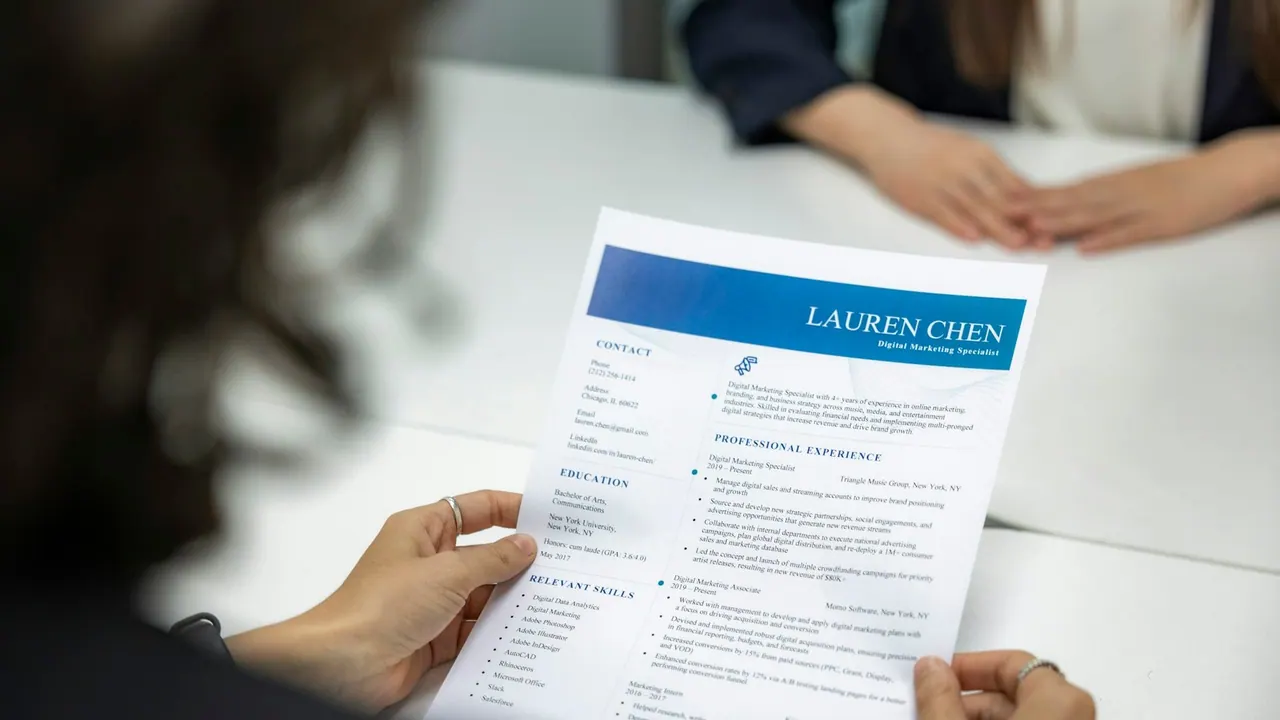
How to write a CV is the first question most job seekers ask, and the answer is shorter than the internet makes it seem. A CV is a summary of your skills, achievements and experience, and it is the first chance you get to promote yourself to an employer. A good one can win you an interview. It has five sections: contact details, an introduction, education history, work history and references.
Make it easy to read first
A CV that is clear and easy to read is easier to take in before anyone reads a word of its content. That is our view, and the National Careers Service’s formatting tips point the same way. Five habits do most of the work:
- Use a clear font such as Arial, Times New Roman or Calibri, in size 11 or bigger.
- Use the same style throughout, including the same date format and the same bullet points.
- Use headings and bullet points so the eye can find things.
- Be clear and to the point.
- Ask someone else to read it and check your spelling and grammar.
A CV you wrote two years ago is not finished. When you update one, add new achievements, experience and skills, remove outdated information, read each section to check it holds what it should, and check that your contact details are correct.
Tailor it to the job
Do not send the same CV to every employer. Read the job advert, which usually includes a job description, essential criteria and company details, and write the CV to match the job and the company. If an advert has no job description, look up the job on a careers profile site to see the typical skills and tasks.
Tailoring can be as light as moving the two skills the employer lists to the top of your work history, or changing the opening lines of your introduction.
The five sections
1. Contact details
Employers need a way to reach you to offer an interview. Give your name, phone number and email address. Add a link to a professional network profile such as LinkedIn when you have one. Do not state your age, date of birth, marital status or nationality.
2. Introduction
Put a few short lines under your name and contact details that sum up who you are and what you hope to do. Make it sound as if you are the right person for this job. An example, written for this guide: “Customer operations graduate seeking a logistics coordinator role.”
3. Education history
If you are early in your career or have little work experience, put education straight after the introduction. If you have a lot of work experience, put work history first. In either case, give the names of your qualifications, the name of the school, college or university where you studied, and the dates you attended.
4. Work history
Include work placements, volunteering and paid jobs, with the most recent first. For each, give the employer name, the job title, the dates and what you did, usually 2 to 3 lines written with the STAR method.
STAR stands for Situation, Task, Action and Result. A line written this way might read: “Cut complaint calls by a third in two weeks.” It names the result. Keep each example short and be ready to answer follow-up questions about it in an interview.
Here is a full work-history entry, invented for this guide, with its employer, title, dates and three STAR lines:
Delivery Coordinator, Northfield Distribution, March 2024 to present
- Coordinate about 40 delivery queries a day for 12 regional customers.
- Cut complaint calls by a third in two weeks with a daily status update during a supplier delay.
- Trained 2 new colleagues in the update method.
The entry runs to 3 lines, inside the usual 2 to 3, and every line carries a number.
5. References
If someone has agreed to give you a reference, such as a current or previous employer, a teacher or a respected person in your community, you can include a references section. Do not put someone else’s contact details on your CV. Write “references are available on request” instead.
If you have little or no experience
A short work history is not a barrier to a CV. For a first job, focus on skills from projects, work experience and volunteering, and put education first. Add interests and hobbies that show skills: the captain of a sports team shows leadership and organisation. Our guide to remote jobs with no experience shows which listings accept this kind of CV, and our guide to how to read a job posting explains how to tell what a posting really requires.
A free CV builder is available from the UK Department for Work and Pensions at jobs.service.gov.uk/cv for people who want a structure to fill in.
If you have a gap
Gaps between jobs are normal, and a gap in your CV is not a problem. You might be asked about it, and the rule is to be open and honest and ready to explain what you did. Focus on the transferable skills you gained and what you learned: volunteering, a short or online course, a year out after school or university.
- A career break. State the reason on your CV, application form or cover letter, for example raising a family. The employer can ask for more detail in the interview.
- Redundancy. Describe the business decision, not yourself. A short entry could give the dates, then say the company merged two roles to cut costs.
- Dismissal. It is better to raise this at the interview than on the application. If asked, briefly explain the circumstances, what you learned and how you have improved.
- Health or disability. Share only what you are comfortable sharing. You do not need to share everything.
- A conviction. Check whether your conviction is spent, and take advice from an organisation such as Nacro on telling employers.
A skeleton you can copy
The outline below is our own example. Replace every item with your own details.
- Name, phone number, email address, professional profile link.
- Introduction: two or three lines.
- Education: qualification, institution, dates attended.
- Work history: employer, job title, dates, 2 to 3 STAR lines each, most recent first.
- References: “available on request”.
Then write a cover letter to go with it. Our guide to how to write a cover letter covers the 3 to 5 paragraphs it needs. Before you send either, our guide to job posting red flags helps you check the employer, and our guide to asking for a reference letter helps you line up the people in your references section.
Frequently asked questions
How long should a CV be?
No length is set in the guidance used here, so this guide does not give one. Keep every line relevant to the job.
What font should I use?
Arial, Times New Roman or Calibri, in size 11 or bigger, used consistently.
Should I put my date of birth or nationality on it?
No. Age, birth date, marital status and nationality all stay off the page.
Do I need to list referees?
No. If you like, write “references are available on request” and leave the contact details of other people off the CV.
Should the CV be different for each job?
Yes. Tailor it to the job and the company, and highlight the skills the employer has asked for.
Our analysis
The most useful fact about a CV is how little of it is fixed. Five sections are expected, in an order that bends with your history: education first when you are early in your career, work history first when you have a lot of experience. Everything else is about making it quick to read, and a clear font in size 11 or bigger, headings and bullet points are the small habits the National Careers Service lists to keep it readable. The service gives no length limit, so how long a CV should run is not settled by its pages.
The rules about what to leave out are specific. Age, date of birth, marital status and nationality stay off the page, and so do other people's contact details, which are replaced by a line saying references are available on request. The detail of how the work history is written is the other firm rule: employer, job title, dates, and 2 to 3 lines built with the STAR method.
What is not stated is any limit on length, any figure for how long recruiters spend on a CV, or how often a tailored CV outperforms a generic one, so none is offered here. The conventions described in this guide are not tested against any measure of results. described here are those of British practice, and this guide has not checked them against employers in the US, Canada, Germany or Nigeria, where the expected contents can differ.
The advice suits a person writing a first CV, returning after a break or changing role, because it covers short work histories, gaps, redundancy and dismissal. It is less complete for senior or specialist roles, where employers may expect publications, portfolios or longer career summaries that this guide does not cover.
If you spot a mistake, tell us and we will correct it.
Edited by Prince Ibenne, founder and editor. Read how we stay independent. This is general information, not legal, tax or immigration advice. See the disclaimer, and check the official source for your own case.