Guide
How to register as self-employed: what the US, UK and Canada require
The US, the UK and Canada each ask for something different when you start working for yourself. This guide sets out the registration steps, dates and thresholds that matter.
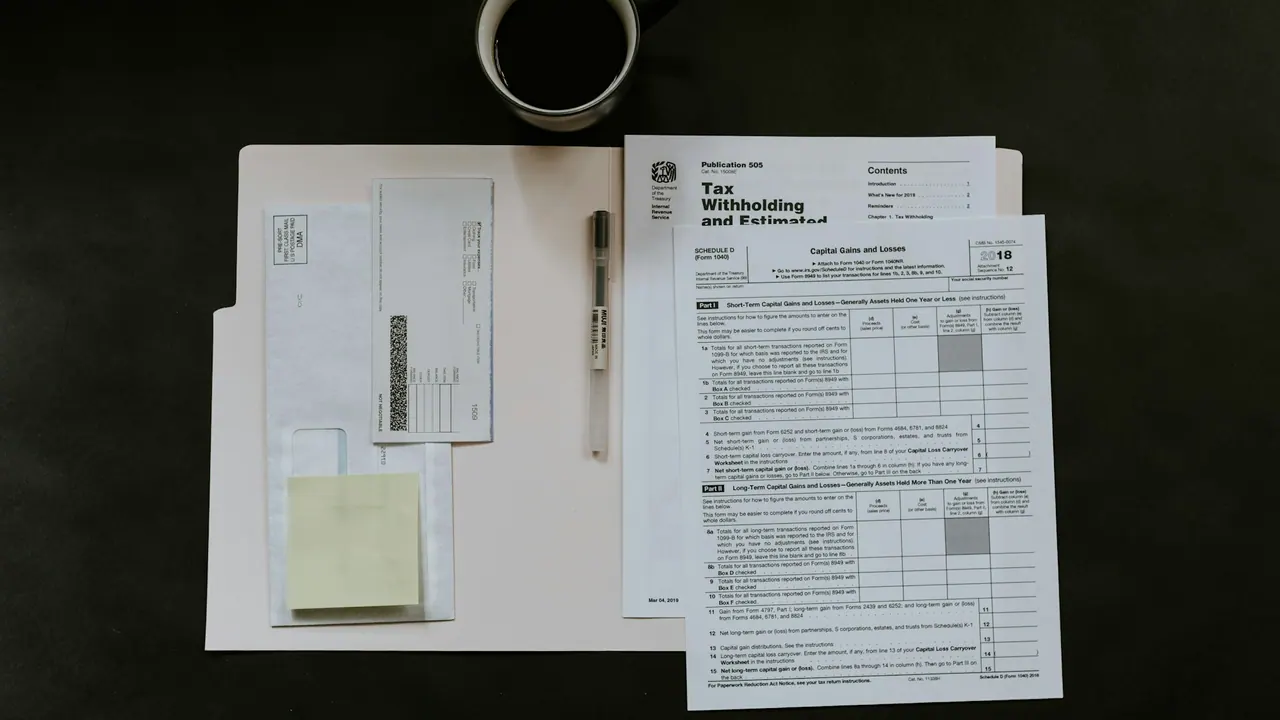
When you start working for yourself, the first question is whether you have to register with anyone, and the second is what you will owe. Countries answer both differently. We analysed the official tax pages for the United States, the United Kingdom and Canada on 3 November 2026, so this guide shows how to register as self employed in each, and what freelance taxes look like afterwards. Rates and limits change from year to year, so check the page itself before you rely on a number.
United States
The IRS page for self-employed people does not describe a registration step. It lists what you owe instead. You generally file an annual income tax return and pay estimated tax every quarter, because no employer is withholding anything for you. You also pay self-employment tax, which covers Social Security and Medicare, on top of income tax. Sole proprietors and gig workers report income or loss on Schedule C, and work out the self-employment tax on Schedule SE.
The tax itself. The self-employment tax rate is 15.3%, made up of 12.4% for Social Security and 2.9% for Medicare. For 2026, the Social Security part stops applying once your combined wages, tips and net earnings pass $184,500, while the 2.9% Medicare part still applies to all net earnings. By our sums, the most the Social Security part can reach is 12.4% of $184,500, which is $22,878. You owe the tax if your net self-employment earnings are $400 or more, and you need a Social Security number or an individual taxpayer identification number to pay it.
You can deduct the employer-equivalent portion of the tax when you work out your adjusted gross income, and that deduction affects income tax only. An additional 0.9% Medicare tax applies above these income levels: $250,000 for married couples filing jointly, $125,000 for married filing separately, and $200,000 for single filers and heads of household.
Estimated tax. It applies if you expect to owe $1,000 or more when you file. The year is split into four payment periods, and the IRS page does not list the 2026 dates, so check Form 1040-ES or Publication 505. You generally avoid an underpayment penalty if you owe less than $1,000 after withholding and credits, or if you pay the smaller of 90% of this year’s tax and 100% of last year’s.
Here is an illustration, which is ours. If last year’s tax was $8,000 and you expect this year’s to be $12,000, 100% of last year’s is $8,000 and 90% of this year’s is $10,800, so $8,000 is the smaller figure and paying it in time generally avoids the penalty. Special rules apply to farmers, fishermen and some higher earners. You may pay weekly, biweekly or monthly, as long as enough is paid by the end of each quarter. This section covers federal rules only, so check your state and local requirements.
United Kingdom
On GOV.UK, you can start trading without registering first. Once your earnings pass £1,000 in a tax year (6 April to 5 April), you have to register for Self Assessment as a sole trader, and you may register sooner if you prefer. From the day you start trading you must keep records that let you calculate what you earned or lost when you file. When you submit your return, HMRC works out whether you need to pay Income Tax and National Insurance contributions, based on your profits.
The dates for the 2025 to 2026 tax year:
| What | Deadline |
|---|---|
| Tell HMRC you need to file, if you have not before | 5 October 2026 |
| Paper return received by HMRC | 31 October 2026 |
| Online return, if you want tax taken through your tax code | 30 December 2026 |
| Online return | 31 January 2027 |
| Pay the tax owed | 31 January 2027 |
| Second payment on account, if you make them | 31 July |
If you register after 5 October 2026, HMRC sets a deadline three months from the date on its letter or email, but you must still pay by 31 January 2027. Late filing and late payment penalties apply, and HMRC gives their amounts on a separate page. By our count, 31 January 2027 is 89 days after 3 November 2026.
Sole traders also carry unlimited liability, which means you are personally responsible for the business’s debts. If you are unsure whether what you do counts as trading, GOV.UK lists signs such as selling regularly for profit, making items to sell, earning commission and being paid for a service. It also states you are probably running a business if you have several customers at once, decide how and when you work, and provide your own main equipment. If you are unsure, you can ask HMRC.
Canada
The Canada Revenue Agency’s page on sole proprietorships says you report self-employment income on your personal return, using Form T2125, the Statement of Business or Professional Activities. For an unincorporated business, the agency states you need a business number only when you register for a CRA program account, such as GST/HST or payroll.
GST/HST. The registration question is the one that catches people. The CRA small supplier threshold is $30,000 in worldwide taxable supplies, counting revenue from you and your associates, and a sole proprietor includes the revenue of all their businesses. You are a small supplier and do not have to register if you stay at or under $30,000 across four consecutive calendar quarters, though you may register voluntarily. If you go over $30,000 in a single calendar quarter, you stop being a small supplier on the sale that took you over, and you must charge the tax from that sale. If you pass the limit over the previous four quarters instead, you stop being a small supplier at the end of the month following the quarter in which you passed $30,000.
The agency’s examples have you register within 29 days of your effective date of registration. Ride-sharing drivers and taxi operators must register from the day they start, whatever they earn.
The CRA also publishes pages on how instalments work, so check them before your first large payment.
The three side by side
| Point | United States | United Kingdom | Canada |
|---|---|---|---|
| Registration step | None described for income tax | Self Assessment once earnings pass £1,000 | Business number only for a program account |
| Main form | Schedule C and Schedule SE | Self Assessment return | Form T2125 |
| Pay in instalments? | Estimated tax, four periods | Payments on account | Instalments (separate page) |
| A threshold to know | $400 net earnings for self-employment tax | £1,000 earnings in a tax year | $30,000 for GST/HST |
Read across a row and the pattern is clear: each country has one early trigger. In the US it is $400 of net earnings, in the UK £1,000 of earnings in a tax year, and in Canada $30,000 of taxable supplies. The US and UK triggers are low, so plan for them from your first paid work. The Canadian one is higher, but the single-quarter test can trigger it fast if a large client pays at once.
What to do with this
In all three countries the burden of working out and paying the tax is yours, because nobody withholds it from what you are paid. Whatever you decide, set money aside from your first payment, and keep a record of every payment in and every cost you can claim from the start.
A simple method, which is ours: open a separate account for tax, and move a fixed share of every payment into it the day you are paid. Ask your tax authority or an adviser what share fits your income, because the pages we used do not give one. Write down the thresholds above in a calendar with their dates, so that a quarter that takes you past $30,000 in Canada or a first £1,000 in the UK does not pass unnoticed. For the invoicing side, see how to invoice as a freelancer, and to check whether you should be treated as self-employed at all, see employee vs independent contractor. Our business section lists more.
Frequently asked questions
Do I have to register before I start trading in the UK?
No. You register once your earnings pass £1,000 in a tax year, or sooner if you choose.
Is there a registration step in the US?
The IRS self-employed page describes none. It describes the returns and payments you owe.
When must I register for GST/HST in Canada?
When you stop being a small supplier, which depends on whether you pass $30,000 in a single quarter or over four.
What if I miss a deadline?
UK and US penalties apply, and the amounts are on separate pages.
Our analysis
The first trigger differs sharply by country, and the guide sets the three side by side. In the United States it is $400 of net earnings for self-employment tax, in the UK £1,000 of earnings in a tax year, and in Canada $30,000 of taxable supplies for GST/HST registration. The US describes no registration step for income tax, the UK requires Self Assessment once earnings pass the line, and Canada's $30,000 can be passed within a single quarter if a large client pays at once.
Nobody withholds tax from a self-employed person, so working it out and paying it is the individual's job from the first payment. None of the three authorities gives a share of income to set aside. Dates are fixed and penalties apply: in the UK the deadlines include 5 October 2026 to tell HMRC and 31 January 2027 to file and pay for the 2025 to 2026 year. A UK sole trader has unlimited liability, which makes the person personally responsible for the business's debts.
The guide works the US safe-harbour rule through with figures of our own, and by our sums the most the Social Security part of the US tax can reach is $22,878. The IRS guide does not list the 2026 estimated-tax dates, and Canada's instalment rules sit on a separate page. Scope is the main limit. The US section covers federal rules only, state and local rules differ, other countries have their own, and rates and limits change from year to year. How to claim costs, UK National Insurance rates and the size of any individual's tax are not stated. Someone starting self-employment in one of the three countries will see which early trigger applies. A person running an incorporated business, or working in another country, will find less of their situation covered.
If you spot a mistake, tell us and we will correct it.
Edited by Prince Ibenne, founder and editor. Read how we stay independent. This is general information, not legal, tax or immigration advice. See the disclaimer, and check the official source for your own case.